Bourbon Pilgrim
Every distillery on the Bourbon Trail charges for its tour except the one everybody wants most. Buffalo Trace gives its tours away, and the result is the strangest ticket in Kentucky tourism: a free product with a concert style on sale, a Wednesday morning scramble, and a secondary market of guided tours selling guaranteed entry to a tour that costs nothing.
So the review question is not really about price. It is whether the tour itself, the buildings, the production floors, the tasting, lives up to a booking process this annoying, and whether the visit still works when the booking process beats you. Short answer: yes on both counts, with one condition we will get to. If you are comparing the guided days that bundle Buffalo Trace with transport from Louisville, start with our comparison of the best bourbon tours from Louisville, because several of them exist mainly to solve the problem this review is about.
The tours, scored side by side
Buffalo Trace runs a small menu of free tours, and they are not interchangeable. Pick by temperament, not by whichever slot survives the Wednesday release.
| Tour | Length | What it really is | Book it if |
|---|---|---|---|
| Trace Tour | 75 minutes | The general tour: history, a warehouse, the Blanton's Bottling Hall, then the tasting | It is your first distillery tour anywhere |
| Hard Hat Tour | 105 minutes | The production tour: cookhouse, fermentation, stills, working floors, heat and noise included | You ask how things work and mean it |
| Old Taylor Tour | 75 minutes | The history tour: Colonel E.H. Taylor, the O.F.C. buildings, the excavated Bourbon Pompeii foundations | You came for the story and the architecture |
| Arboretum and Botanical Gardens Tour | 75 minutes | The grounds tour at walking pace | Your group includes people skipping the tasting |
| National Historic Landmark Tour | 90 minutes | The campus as a landmark, building by building | You have done a production tour somewhere else already |
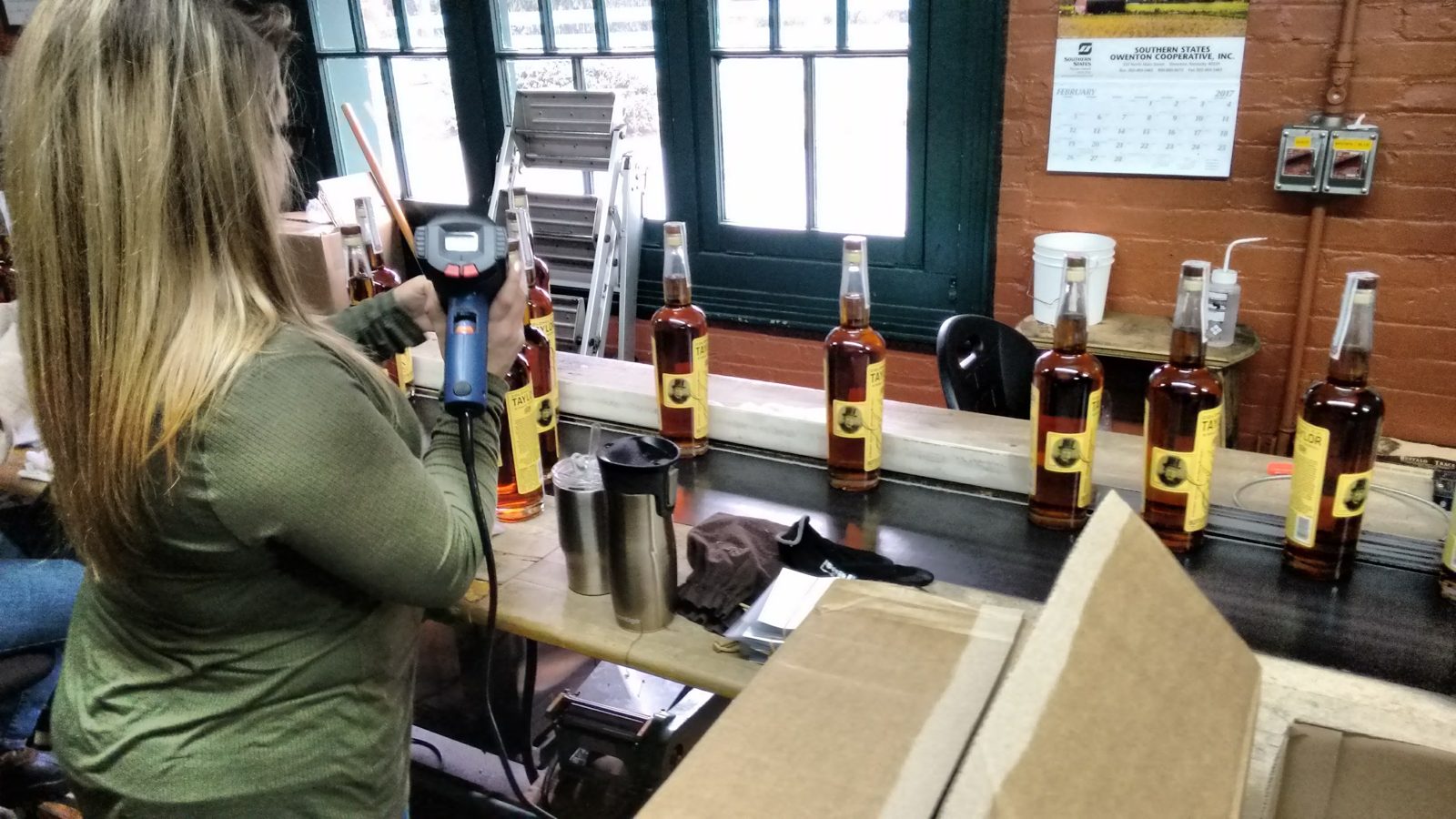
Two patterns show up in review after review, and our read matches them. First, the guide makes or breaks the day. Buffalo Trace guides are repeatedly described as the best on the trail, and names get mentioned in reviews the way servers get mentioned at great restaurants. Second, the Hard Hat Tour is the one repeat visitors graduate to. Multiple reviewers who called the Trace Tour a fine bourbon basics class say the Hard Hat is the tour worth building a morning around, because you stand next to hot equipment and watch Blanton's being bottled by hand in a room that looks nothing like an automated line.
The booking math behind the table lives in our guide to getting Buffalo Trace tour tickets, which covers the Wednesday release rhythm in full. The one number to hold onto here: tickets open about eight weeks out, and Hard Hat slots are usually the first to go.
What you actually see
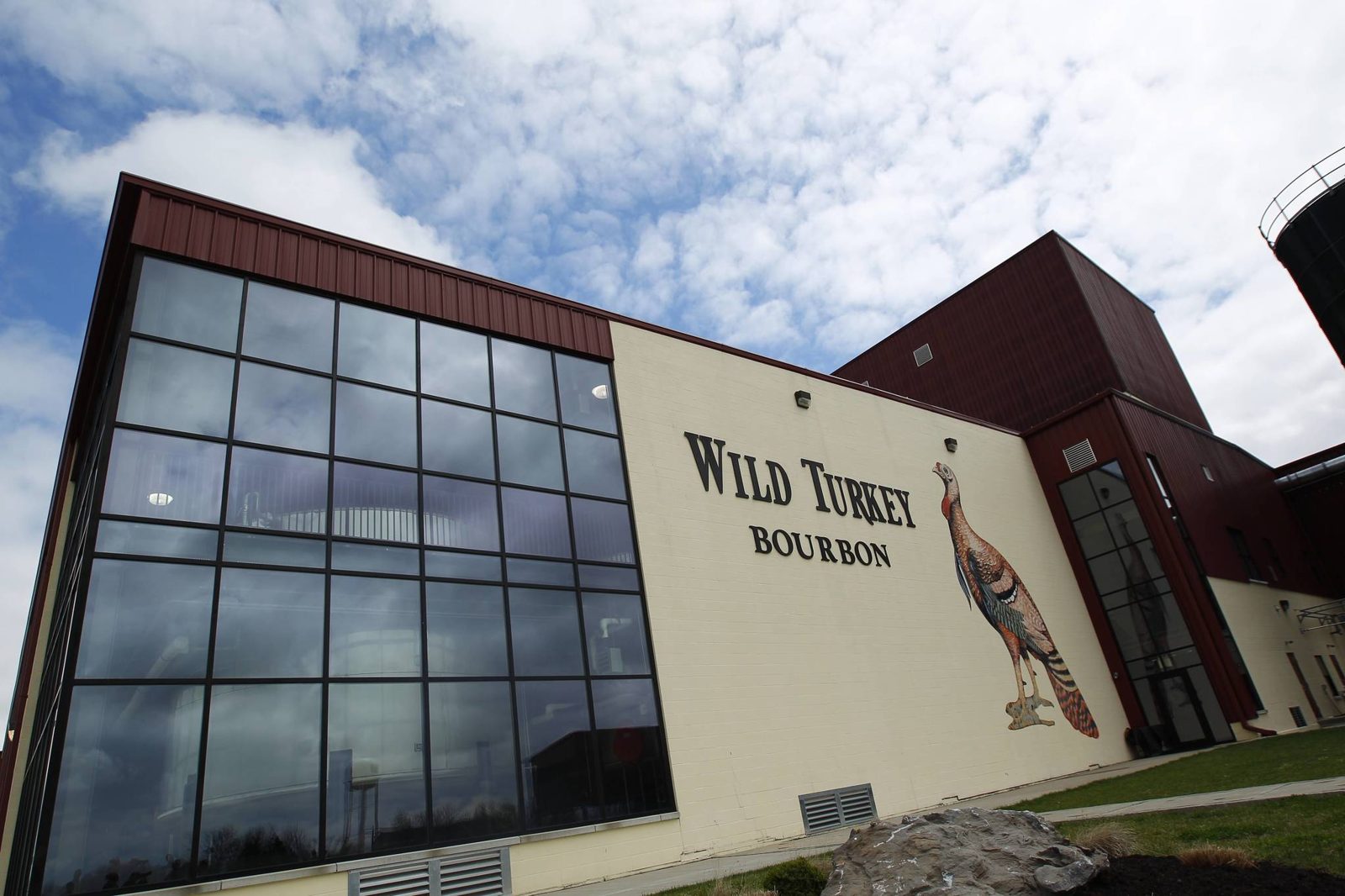
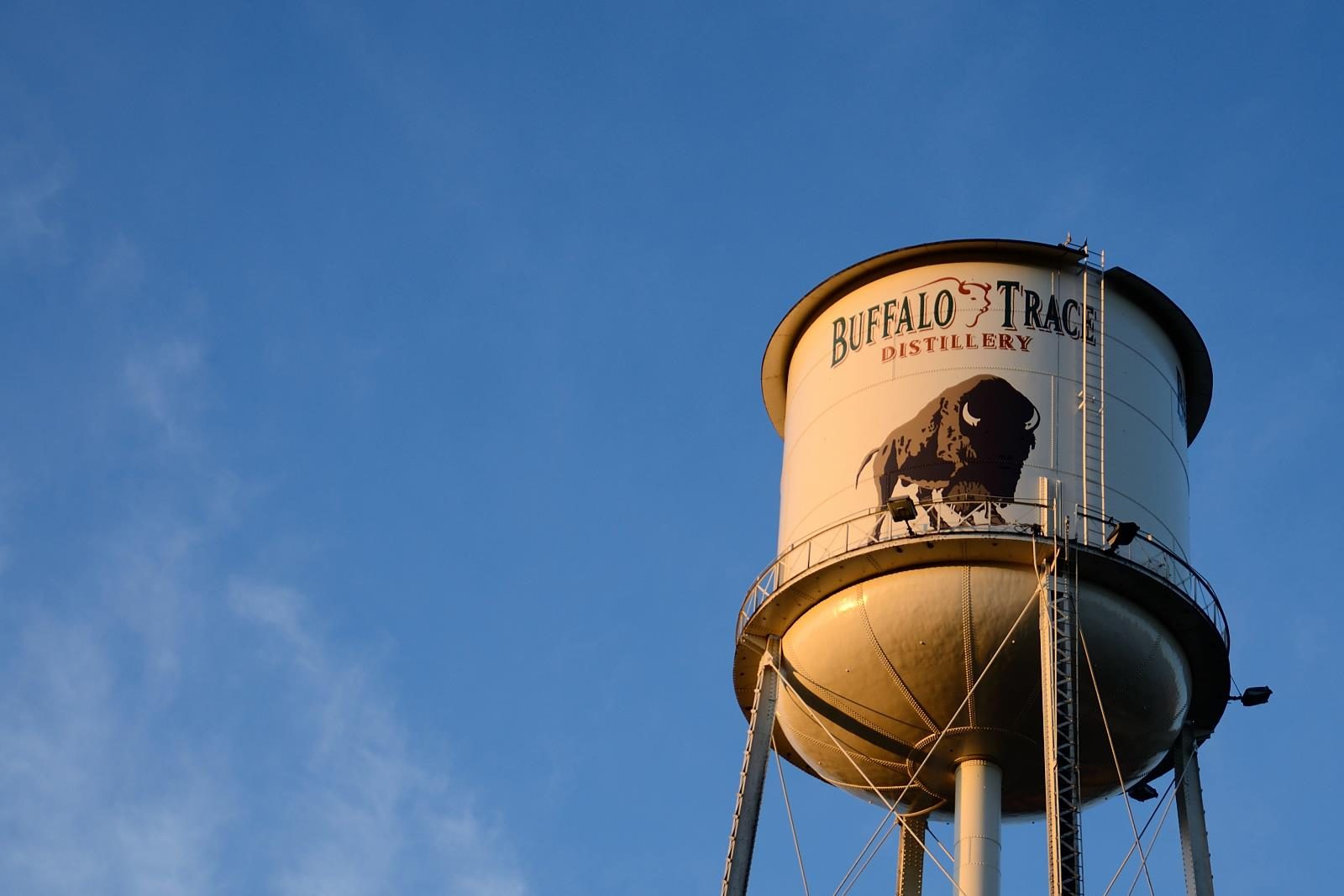
The campus is the first surprise. Buffalo Trace is not a visitor center with a distillery attached. It is a working industrial site of about 440 acres and 100 buildings along the Kentucky River, and the tour walks you through the middle of it while barrels roll past on their way between warehouses.
Warehouse C is the stop people remember. The distillery says it was constructed in 1885 and holds about 22,000 barrels across five stories of wooden ricks. In 1886 the site installed steam heating in its warehouses, a first in the industry, and the distillery still uses that system today to keep bourbon active through cold Kentucky winters. Warehouse A, built in 1881, now serves as the visitor center, and Warehouse H, built in 1935 by Albert B. Blanton, is the home of Blanton's, launched in 1984 as the first single barrel bourbon sold commercially. Blanton himself arrived at this distillery as a 16 year old office boy in 1897 and was president by 1921.
The Old Taylor Tour adds the strangest sight on the property. During a 2016 renovation, crews unearthed the original O.F.C. distillery foundations, malting floor and fermentation tanks from the 1870s, a buried distillery now open to view and nicknamed Bourbon Pompeii. Taylor bought this site in 1870 and spent more than $70,000 building his model distillery, a fortune at the time. Lightning burned it in 1882 and it was rebuilt within a year at a cost of $44,000 above the insurance payout. The one story stone Old Taylor House from 1792 still stands on the grounds.
None of this is a museum reconstruction. The distillery kept operating through Prohibition by producing bourbon for medicinal purposes, which is how it earned the title of oldest continuously operating distillery in America, and owner Sazerac has spent $1.2 billion expanding the site, including a new still house with column stills 40 feet tall. You are touring a factory that happens to be a National Historic Landmark, designated in 2013, and the friction between those two identities is exactly what makes the tour good.
The tasting, honestly
Every tour ends at the tasting bar, and the pours are generous for a free tour. Expect the core range, Buffalo Trace Bourbon and Eagle Rare as the anchors, with the rotation reaching further on good days. Recent tour reviews describe Sazerac Rye and Stagg in the glass, and the distillery makes more than 15 bourbons and rye whiskeys on this site, including Weller, Blanton's and the E.H. Taylor line, so the bench is deep. Nobody should plan around a specific allocated pour, and Pappy Van Winkle, which is produced here, almost never appears. Treat anything beyond the core two as a bonus the day hands you.
The honest limits: the tasting is a guided group format, not a lounge, and on peak days the room runs on a schedule. If a slow, seated, premium tasting is the point of your trip, a paid tour elsewhere or a guided day with a premium tasting built in will suit you better. As the final act of a free tour, though, it overdelivers, and the bourbon balls and root beer keep non drinkers and kids inside the experience instead of watching it.
The grounds earn their own hour
Here is the part first timers consistently underrate. You do not need a tour ticket to have a Buffalo Trace day. The grounds are open to the public, the gift shop rotates one allocated bottle per day at normal retail prices, and each customer can buy one product per day and each product once every 90 days. Arrive before 9 AM for a realistic shot at the daily bottle, and check the distillery site and social feeds that morning for what is releasing.
The scale explains the crowds. Master distiller Harlen Wheatley told WDRB that 2024 was a record year with more than 600,000 visitors, making Buffalo Trace the biggest bourbon tourism draw in Kentucky, in a year when the entire Kentucky Bourbon Trail recorded about 2.7 million visits. The site has also survived its river. In April 2025 the Kentucky River rose past 48 feet, floodwater put about three feet of water inside the visitor center, and production stopped, yet shipping restarted almost at once and normal tours, tastings and shopping had resumed by August. A distillery that floods, reopens and still gives the tour away is a hard thing to review harshly.
Practical numbers for the day itself. The distillery is at 113 Great Buffalo Trace in Frankfort. Hours run Monday through Saturday 9 AM to 5 PM and Sunday 11 AM to 5 PM, and parking is free. Frankfort sits about 50 miles and one hour east of Louisville and about 25 miles and 30 minutes west of Lexington. Castle and Key is five minutes away and Woodford Reserve about 20 minutes, so a Buffalo Trace morning pairs naturally with one more full tour. Our Buffalo Trace vs Woodford Reserve vs Maker's Mark comparison scores those three against each other if you are choosing where the second slot goes.
The downsides, stated plainly
Three real ones. First, the booking system is the worst part of the product, full stop. A free tour that requires an eight week advance Wednesday alarm at 10:00 AM Eastern, with no standby list, will lock out spontaneous travelers and anyone whose trip is already inside the window. Second, success has made the site busy. Gift shop lines on allocated bottle mornings and full tour groups at midday are the norm in peak season, and reviewers advise early arrivals even on weekdays. Third, this is a walking tour across an industrial campus, largely outdoors, with stairs on some routes. Kentucky summer heat is a genuine factor, and comfortable shoes are not a suggestion.
What is not a downside: the price of everything else. The tour is free, the tasting is free, parking is free, and the grounds are free. The money version of a Buffalo Trace day only appears if you choose it, which brings us to the guided route.
When the Wednesday release beats you: the guided days
Guided tours from Louisville buy their Buffalo Trace access in bulk, so the booking fight becomes the operator's problem. These are the same products ranked in our best bourbon tours from Louisville comparison, checked October 2026.
| Tour | Price | Duration | Group | Rating | What it solves |
|---|---|---|---|---|---|
| Mint Julep Experiences half day | $89 | 5 hours | Van | 5.0 (3 reviews) | Buffalo Trace only, transport and admission, back by 2pm |
| Ky Bourbon Tours customizable | $189 | 6 to 8 hours | Max 11 | 4.2 (24 reviews) | Buffalo Trace guaranteed, then any 2 of 20 plus distilleries |
| B&C Buffalo Trace + Churchill Downs | $199.99 | 6 hours | Max 10 | 4.6 (13 reviews) | Buffalo Trace in the morning, the Derby track after lunch, admission and lunch included |
| Mint Julep Experiences full day | $275 | 9.5 hours | Max 22 | 5.0 (51 reviews) | Buffalo Trace with a premium tasting, plus Bulleit, Rabbit Hole, and Pappy and Co. |
The $89 half day is the value play and the one most readers of this review should price first: it costs less than the gas, parking and tasting fees logic of a self planned Frankfort run once a group splits it, and it returns you to Louisville by early afternoon. The $275 full day is the splurge that turns one distillery into the whole day, and at $100 plus per person it sits in the premium tier this site recommends when the keyword allows. Our Bourbon Trail bottle shopping guide covers what to do with the gift shop time these tours build in, including the daily allocated bottle rules above.
Check the $89 Buffalo Trace half day on Viator →
Check the $275 Mint Julep full day on Viator →
Worth the hassle? Yes, and here is the condition
Book the Hard Hat if you can, the Trace if you cannot, and go either way. The tour is the rare famous thing that is better than its reputation, because the reputation is about bottles and the tour is about a working landmark: steam heated warehouses from 1885, a bottling hall that still finishes bottles by hand, an excavated 1870s distillery in the ground, and a tasting at the end, all free.
The condition is the calendar. If your trip is eight or more weeks out, set the Wednesday alarm and take the free tour, because nothing else on the trail touches it at any price. If your trip is closer than that, do not spend it refreshing a sold out booking page. Walk the grounds, work the bottle line, and let a guided day carry the guaranteed entry. Either route ends in the same tasting room, and that room is worth the trip to Frankfort on its own.
Trip inside the eight week window? The $89 half day still gets you inside Buffalo Trace with guaranteed admission and the driving handled:
Check the $89 Buffalo Trace half day on Viator →
Check the customizable $189 day with Buffalo Trace guaranteed on Viator →
Affiliate links. If you book, we may earn a commission at no extra cost to you.