Bourbon Pilgrim
The suspicion is reasonable. Bourbon is big business now, the gift shops are enormous, and every visitor has stood in at least one tasting room wondering whether they just paid tour money for a liquor store pour with better lighting. Some of those rooms deserve the suspicion. Most bourbon tours do not, and the reason is simple arithmetic: the real product is priced like a working factory visit, not like an attraction. This guide runs the numbers, names the five tests that separate a genuine distillery tour from a tasting room in costume, and points at the stops that pass every test. When you are ready to compare the guided days themselves, our ranking of the best bourbon tours from Louisville scores each one on price, group size and what is actually included. Our Louisville trailhead guide maps the downtown cluster where most first visits start.
The price test comes first, and most tours pass it
Tourist traps share one habit everywhere in the world: the price floats free of the cost of the thing itself. Bourbon tours bought direct fail that test in the best possible way. They are cheap, and they are cheap in public, at prices the distilleries post on their own listings. Most distillery tours bought direct cost $12 to $40 per person.
| Stop | Tour price | Length | What the ticket buys |
|---|---|---|---|
| Buffalo Trace, Frankfort | Free, including the tasting | 75 to 105 minutes | A working distillery tour at the oldest continuously operating distillery in America, per the distillery |
| Four Roses, Lawrenceburg | $22 per person | About 1 hour | The 1910 Spanish Mission distillery and a seated tasting of three expressions |
| Old Forester, Louisville | $32 per person | 70 to 75 minutes | The only onsite cooperage on the trail, where barrels are built and charred in front of the tour |
| Angel's Envy, Louisville | About $30 per person | About 1 hour | A finishing lesson, bourbon rested in port wine barrels, tasted with local chocolate |
| Maker's Mark, Loretto | About $30 per person | 75 minutes | A National Historic Landmark campus of 1,100 acres, plus bottle dipping free with a bottle purchase |
| Woodford Reserve, Versailles | $35 to $40 per person | 70 minutes | Copper pot stills and a tasting built around five sources of flavor |
| Heaven Hill, Bardstown | $40 per person | About 1 hour | The You Do Bourbon session, a guided tasting and a bottle you fill and label yourself, charged separately |
Read that table as the whole argument. A trap does not charge $22 to walk you through a century old distillery for an hour. It cannot afford to. These prices work because the distilleries earn their money on the bottles you buy afterward and on the drinkers you become for life, which is exactly why the tour itself can stay honest. The one premium line in the table earns its place the same way: the Heaven Hill session sells participation, not admission, and the bottle is charged separately at the register so you can see precisely what the experience cost and what the bourbon cost.
Scale tells the same story. The official Kentucky Bourbon Trail now lists 57 distilleries and tasting rooms, per AFAR, and the program was founded by the Kentucky Distillers' Association in 1999. A marketing invention that size still has to deliver at the door, because every stop is reviewed against the stop twenty minutes down the road. Visitors who feel cheated name the distillery, and the next visitor reads it before booking.
The five tests that separate a tour from a trap
Price alone does not clear every stop, because a cheap ticket can still buy a thin hour. Run all five tests before you book anything, direct or guided. Each one can be answered from the listing itself, without leaving your chair.
Test one: is something made here? A real tour walks past working equipment. Full tours run 60 to 90 minutes and cover grain, fermentation, the still, the barrel and the rickhouse, per Kentucky Bourbon Boys. A stop with no still, no fermenters and no aging barrels on the route is a tasting room, whatever the sign calls it. Tasting rooms are fine when they charge tasting prices. They become traps when they charge tour prices for a pour and a story.
Test two: how big is the group, and how long is the clock? Small caps are the clearest quality signal in the listings. Old Forester caps its tour at 14 guests, Angel's Envy runs groups of 12 or fewer, and both figures come from the distillery listings checked in November 2026. A listing that names no cap and runs well under an hour is selling throughput. The pours will be poured assembly line style, and your questions will compete with thirty strangers.
Test three: what is actually poured? A real tasting teaches something a liquor store cannot. Angel's Envy pours bourbon finished three to six months in port wine barrels, in small batches of 8 to 12 barrels, and pairs it with local chocolate to prove what the second barrel added. Four Roses makes ten recipes from two grain mixes and five yeast strains, and its tasting lets you compare them. A flight of standard bottles at standard proofs, with no distillery only pour and no comparison built in, is retail wearing a tour badge.
Test four: where does the time go? At Maker's Mark the visit still needs two hours even though the Classic Tour runs 75 minutes, because the grounds, the gift shop and the bottle dipping all earn their time. That ratio is healthy: the shop is the reward at the end of a real visit. The trap ratio inverts it, fifteen minutes of displays and forty minutes of retail. If a listing describes the shopping in more detail than the production, believe the listing.
Test five: can you walk the grounds without paying? The most confident stops on the trail say yes. Buffalo Trace opens its grounds and gift shop to the public with no ticket at all, per the distillery. Maker's Mark opens its grounds and gift shop to walk in visitors, and the dipping is free with a bottle purchase. A business that trusts you to enjoy the place before you spend anything is not running a trap. It is running a distillery that happens to welcome guests.
Where the traps actually live
They exist, and they cluster in three predictable places. Naming the shapes matters more than naming names, because the shapes survive every rebranding.
The tasting room in costume. The classic case is a polished visitor center with video walls, a scripted heritage story and no production anywhere on the property, charging the same $30 as the working distillery down the street. It fails test one and test three at once. The defense is not cynicism, it is comparison: our guide to which Louisville distillery has the best tour scores the downtown stops on exactly this ground, production first, and it is why Old Forester and Angel's Envy outrank prettier rooms.
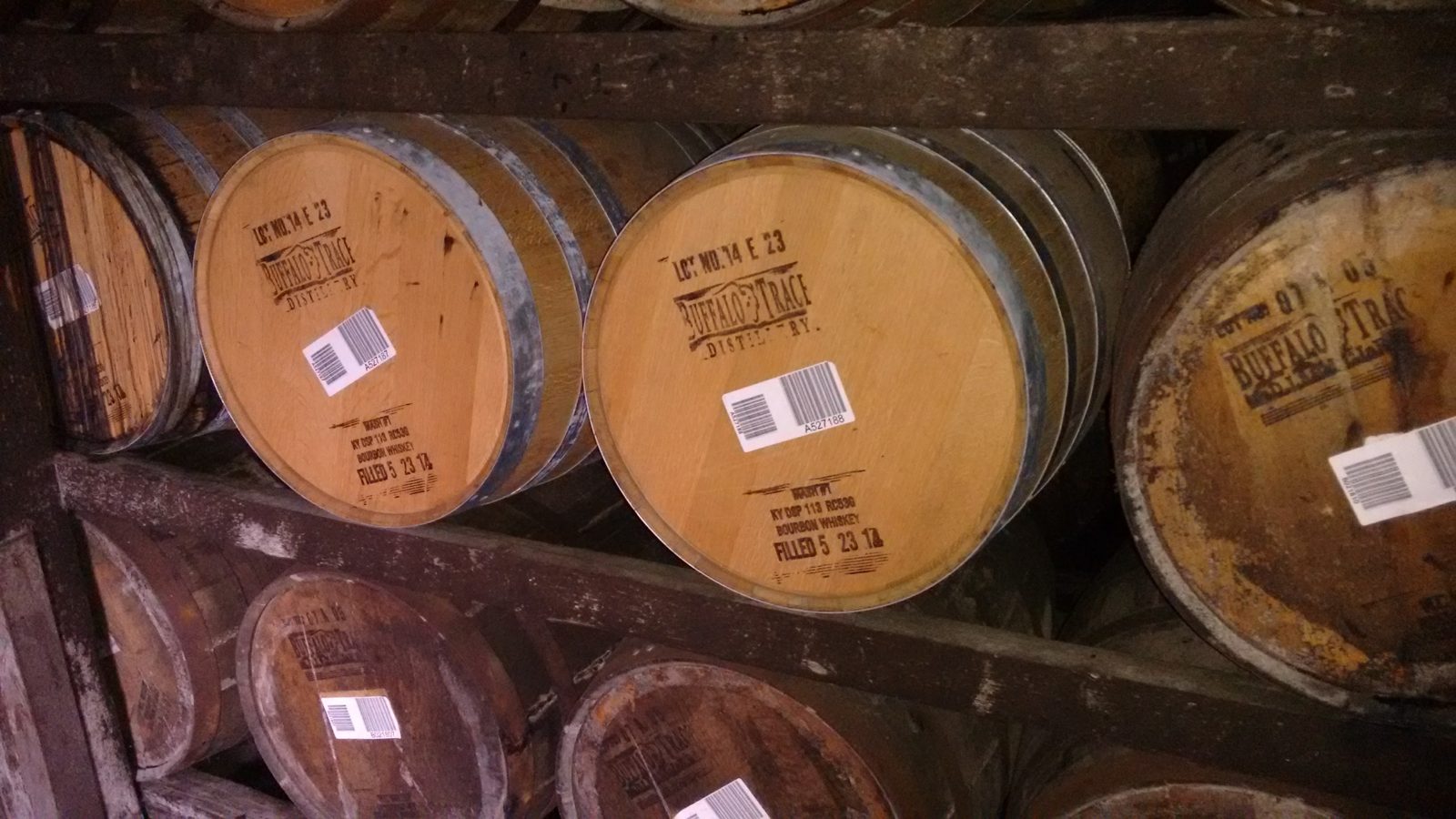
The gift shop with a tour attached. Watch for the visit shaped like a funnel, a short walk, a quick pour, and a long, staffed retail floor at the only exit. Buffalo Trace shows the honest version of a big gift shop: the shop is packed because the tour was free and the bourbon is allocated, and stock rotates daily and can sell out before a late morning arrival. When the shop is the product and the tour is the excuse, entry should be free. If it is not, walk.
The guided day with admissions extra. This is the trap with the highest dollar value, because the headline price looks complete. Some packaged days charge $189 and up per person and still leave distillery admissions, tastings or lunch to your wallet at each stop. The honest listings say what is included in plain terms. The B&C Bourbon Experience Tour includes the distillery bookings for the 3 stops you pick from its list of 9, per its Viator listing. The Ky Bourbon Tours day includes admission at Buffalo Trace, per its Viator listing. Any guided listing that will not state its inclusions in one sentence is asking you to fund the surprise.
Crowds deserve one honest paragraph of their own. The biggest name distilleries do pack in visitors on fall weekends, and a Saturday tour at full cap can feel rushed even at a genuinely great distillery. That is a scheduling problem, not a trap, and it has a scheduling cure: weekday visits, the first tour of the day, and a ceiling of two full production tours before you switch formats, the pattern our guide to whether bourbon tours get repetitive lays out in full.
Guided days: markup, or the honest price of certainty?
The sharpest version of the tourist trap question is aimed at the guided days, so run their math in the open. Driving yourself, three distillery tours cost $36 to $120 per person in fees alone, and our full Bourbon Trail cost breakdown adds the rental car, fuel and parking on top. Somebody in your group also stops tasting and drives, on rural roads, between stops that sit 20 to 45 minutes apart in a single corridor, per the James B. Beam Distilling Co. planning guide.
| Guided day | Price | Duration | Group | Rating | What the premium actually buys |
|---|---|---|---|---|---|
| Mint Julep Buffalo Trace half day | From $89 per person | 5 hours | Van group | 5.0 (3 reviews) | Transport plus guaranteed Buffalo Trace admission, the hardest ticket on the trail |
| Ky Bourbon Tours customizable day | From $189 per person | 6 to 8 hours | Up to 11 | 4.1 (26 reviews) | Buffalo Trace plus any 2 stops you pick from a list of 22, with Buffalo Trace admission included |
| B&C Bourbon Experience Tour | From $249.99 per person | 7 to 9 hours | Up to 12 | 4.8 (98 reviews) | Your pick of 3 distilleries from a list of 9, booked for you, with free cancellation up to 24 hours ahead |
| Mint Julep Experiences full day | From $275 per person | 9.5 hours | Up to 22 | 5.0 (51 reviews) | A fixed and varied route with lunch and gratuities included, per its Viator listing |
The verdict hides in the first row. The cheapest guided product on the market exists to sell one thing: certainty at Buffalo Trace, where free tickets release about eight weeks out on Wednesdays at 10am Eastern and sell out in minutes, per the distillery. Paying $89 to convert a lottery into a reservation is the opposite of a trap. It is the most transparent trade in bourbon country. The rows above it add choice, distance and inclusions, and each one states those inclusions in its listing, which is test five applied to operators: the honest ones tell you what is covered before you pay.
Check the Mint Julep Buffalo Trace half day on Viator →
Check the B&C pick three day on Viator →
The stops that pass all five tests
Old Forester, Louisville. The only onsite cooperage on the trail, where you watch barrels being raised, hooped and charred, a 44 foot copper column still behind glass, groups capped at 14, and a $32 ticket, per the Beam guide to Louisville tours. Production is not part of the show here. It is the show. Our Old Forester distillery tour review scores the full visit.
Buffalo Trace, Frankfort. Three genuinely different tours at one address, the 75 minute Trace Tour, the 105 minute Hard Hat Tour through the working floors, and the Old Taylor Tour across the excavated 1870s foundations, and every one of them free including the tasting, per the distillery. A trap cannot survive at a price of zero with a waiting list. Our Buffalo Trace distillery tour review picks which tour fits which visitor, and our guide to free bourbon tours and tastings in Louisville rounds up the other no cost doors in the region.
Angel's Envy, Louisville. A working downtown distillery built around one clear lesson, finishing, with the port barrels, the small batches and the chocolate pairing all serving that lesson, at about $30 for about an hour in groups of 12 or fewer. Our Angel's Envy distillery tour review covers the Signature Tour in full.
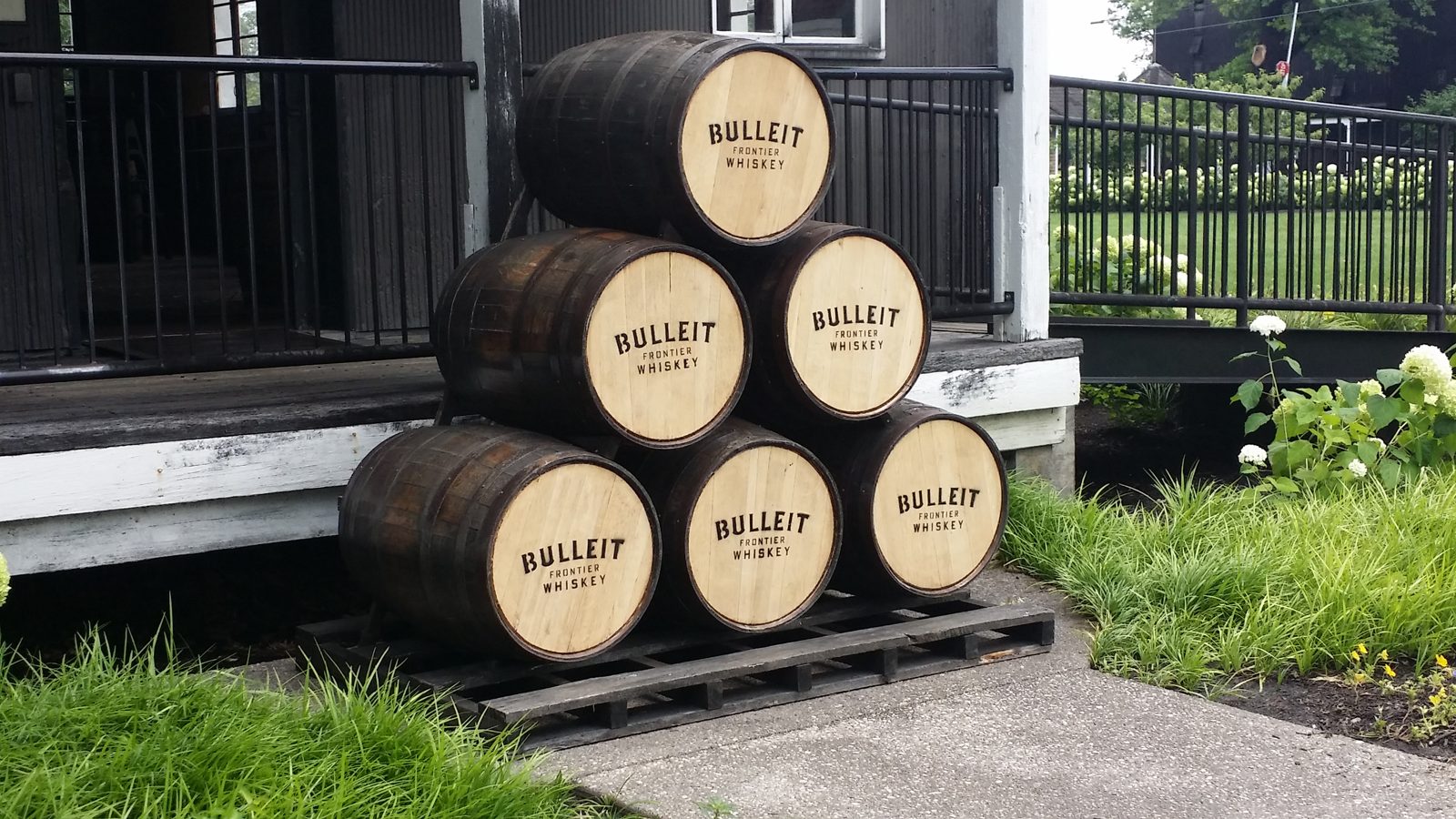
Stitzel Weller, Louisville. The distillery in the photograph at the top of this page, in Shively, opened on Derby Day in 1935 and now hosts the Bulleit Frontier Whiskey experience, per Diageo. It passes the tests the quiet way: a real historic plant, real barrels stacked by the door, and a campus built for making whiskey decades before anyone thought to charge for looking at it.
Maker's Mark and Four Roses. Maker's Mark charges about $30 to walk a 1,100 acre National Historic Landmark and dip your own bottle, free with the purchase, which is a souvenir you make rather than a trinket you are sold. Four Roses charges $22 for the clearest flavor education on the trail, ten recipes explained in a 1910 Spanish Mission distillery. Our Maker's Mark distillery tour review and our Four Roses distillery tour review hold both to the same five tests.
The call: pay for production, never for pours alone
Bourbon tours are not tourist traps, because the core product refuses to behave like one: working distilleries, posted prices between free and $40, small groups, and grounds you can walk without spending a cent. The traps are real but marginal, and they are all visible before you book: no production on site, no group cap, standard pours at tour prices, a gift shop where the tour should be, or a guided day that will not say what it includes. Run the five tests, book the stops that pass them, and save your suspicion for the one or two listings that earn it. Our broader verdict on the trip itself, costs and all, sits in our guide to whether the Bourbon Trail is worth it.
A guaranteed seat at a free tour that sells out in minutes is the most transparent purchase in Kentucky. Take the half day that locks Buffalo Trace in, and spend the afternoon on Whiskey Row:
Check the Mint Julep Buffalo Trace half day on Viator →
Check the Ky Bourbon Tours customizable day on Viator →
Affiliate links. If you book, we may earn a commission at no extra cost to you.